
Doctrine to Be Rejected # 9 —That the wicked will suffer eternal torture in hell.
This can be positively stated as: The wicked are destined to eternal oblivion in the grave, excepting only those of their number who are answerable to God and will be raised to condemnation, to return eternally to the grave.
This doctrine, associated with is as that of conditional immortality or the sleep of death, goes back in the history of our community to 1835, when John Thomas wrote his “34 questions”. They include, in part:
- If, as soon as the breath is out of a man’s body, he be instantly translated to heaven or hell, how can he be said to be dead, and to rise again from the dead; is a man in heaven or hell, dead and alive at the same time? If so, where do the scriptures teach this?
9, Do the scriptures teach that men and women, and children, come from heaven and hell when they rise from the dead; or, do they not rather teach, that men’s mortal bodies will be made alive, i.e. re animated by the spirit, i.e. the power of God, as the body of Jesus was?
It is interesting that the earliest Statement of Faith by Robert Roberts, written in 1868, says:
That the popular belief in heaven and hell is a delusion, therefore, the wicked will not suffer eternal torture, but will be engulfed in total destruction after resurrection.
The first part, concerning man’s conscious existence in death, was covered last month.
Origin of hell
The concept of hell held by most professing Christian’s does not come from the Bible. Accepting the distorted ideas from this world, cut off from God, their beliefs originated from pagan philosophy. Before proving the truth about hell from God’s Word, we need to take note of the world’s traditional beliefs.
The New Jewish Encyclopedia comments on the subject of hell in a very definitive manner:
“Judaism does not teach a specific concept of hell. It is assumed that evildoers will be punished, but the manner and place of chastisement are left to the justice of God.”
Other religions exercise much more imagination to fit their concept of eternal punishment. One of the most concise summaries of man’s traditional concept of hell is found in the Encyclopedia Americana:
“As generally understood, hell is…whither lost or condemned souls go after death to suffer indescribable torments and eternal punishment…It is the place of divine revenge, untempered, never ending. This has been the idea most generally held by Christians, Catholics, and Protestants alike.”
As to the similarity of the concept of hell among various religions, the article continues, “The main features of hell as conceived by Hindu, Persian, Egyptian, Grecian, and Christian theologians are essentially the same.”
The writings of Dante Alighieri (1265-1321) made a strong impression on Catholics during the later Middle Ages. His work The Divine Comedy provided vivid details of sufferings in the dismal setting he described as hell or “Inferno”. His influential writings describing this inferno were inspired by many influences, including those of the Greek philosophers and strangely, it has been argued, the philosophy of Islam.’ All these ideas were from sources other than the Bible.
Strangely, the Catholics have recently repudiated this concept of hell as a place. Pope John Paul II, in a statement published on July 28, 1999:
“The images of hell that Sacred Scripture presents to us must be correctly interpreted. They show the complete frustration and emptiness of life without God. Rather than a place, hell indicates the state of those who freely and definitively separate themselves from God, the source of all life and joy.”
Bible usage — Old Testament1
In the Authorized Version of the Old Testament the word ‘hell’ appears thirty-one times, however, in the Revised Standard Version of the Old Testament the word ‘hell’ does not appear in any of these verses. Instead the word ‘Sheol’ appears. What does ‘Sheol’ mean? Sheol is a transliterated Hebrew word that means “a hollow and subterranean place, full of thick darkness”(Gesenius). The New International Version of the Old Testament does not use ‘Sheol’ or ‘hell’ in any of these verses but rather ‘grave’, ‘death’ or ‘the depths’.
In none of the verses where Sheol appears is there any association with the idea that this is a place of torment or punishment. The verses that do comment on what is experienced in Sheol, indicate that there is a complete lack of conscious thought or deliberate action there. For example:
“For in death there is no remembrance of Thee: in the grave [sheol] who shall give Thee thanks?” (Psa 6:5);
“there is no work, nor device, nor knowledge, nor wisdom, in the grave [sheol]” (Eccl 9:10);
“the grave [sheol] cannot praise Thee, death cannot celebrate Thee: they that go down into the pit cannot hope for Thy truth” (Isa 38:18).
‘Hell’ in the AV of the Old Testament is, therefore, to be understood as referring to that place to which all are gathered at death.
Hell in the New Testament
In the Authorized Version of the New Testament the word ‘hell’ appears twenty-three times. This may cause confusion because in the original Greek three different words are to be found. These are Gehenna, Hades, and also Tartaros, which once occurs in 2 Pet 2:4.
The confusion is compounded in the New International Version, which renders hades as ‘hell’ in Luke 16:23, as ‘grave’ in Acts 2:27 and as ‘hades’ in Rev 1:18. In the Revised Standard Version there is less confusion and more consistency because Gehenna is always translated ‘hell’, and hades is left as ‘Hades’ (Matt 16:18 uses ‘death’, but the margin indicates ‘Hades’).
What do these Greek words mean?
Gehenna means ‘the valley of (the sons of) Hinnom’. In the Old Testament it is associated with idolatry, fire rituals and child sacrifices (2 Kgs. 23:10; Jer 7:31,32; 19:1-6; 32:35).
The normal Christadelphian view is2:
In New Testament times it was still associated with fire and death. It was the place where the bodies of convicted criminals were thrown and where waste materials were deposited to be destroyed by the ever-burning fires. With the exception of James 3:6 it is used only by Jesus, and in passages in which he is stressing the certainty of annihilation at death if behavior and attitudes are not changed. “Hell fire” is not, therefore, speaking of the nature of the punishment for those adjudged as wicked but is a picture of what will happen to the unworthy. As the hot and corrosive conditions in the valley of Hinnom utterly destroyed anything left there, so the unworthy will cease to exist.
Hades is the Greek equivalent of the Hebrew sheol and generally refers to that which the dead occupy: the grave. It is translated as ‘grave’ in the AV in this passage: “O death, where is thy sting? O grave [hades], where is thy victory?” (1 Cor 15:55). This appears to be quoting Hos 13:14, where, interestingly, sheol is translated ‘grave’: “O death, I will be thy plagues; O grave [sheol], I will be thy destruction”.
The treatment of Hades is essentially quite correct. The discussion of Gehanna is essentially that repeated in almost every Christadelphian source we have seen.
There is no doubt that Gehanna, the valley of Hinnon, is undoubtedly the place of burial of convicted criminals as well as the location of “80 burial caves, most of which date to the time of Jesus, what archaeologists and other scholars refer to as the Herodian period (37 BC – 70 AD). Some of these tombs are in magnificent condition, still standing to their full height”3. But it probably did not gain this association because the garbage of the city was burned there: this is a very late tradition, recorded only in around 1200 AD by Rabbi David Kimhi.
However, the association of the valley with unquenchable fire in the minds of the Jews that Jesus was addressing is almost certainly correct. The theme of the “accursed valley” is developed in extra Biblical literature after the close of the Old Testament. In these writings, Gehenna represents an eternal, but still localized,
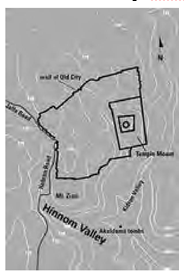
place of judgment (1 Enoch 27) bearing that name (2 Baruch 59:10, 85:13; 4 Ezra 7:36). Isaiah, in a tradition parallel to the judgment in Jer 19:11-14, states, “their worm will not die, nor will their fire be quenched” (Isa 66:24 NIV). Though the two symbols (the valley and the unquenchable fire) do not refer to each other directly, they are associated with each other in these extra Biblical texts. Within the New Testament, these symbols are largely interchangeable metaphors (Mark 9:43). The association is likely due to the interdepartmental synthesis of Jer 7:32 and Isa 66:24, the original (burnt) sacrifices offered in Hinnom, or the tradition that the Maccabees burned enemy corpses in it4.
Thus the Christadelphian view that hell (Gehanna) represented burning and complete destruction at the time of Jesus, and hence for our interpretation of the Bible, is correct. But the explanation that it was a place of the burning of garbage, and hence of perpetual fire and destruction, is based upon a dubious tradition of a millennia later than the time of Jesus.
- See the Wikipedia article on “Divine Comedy”.
- These two sections are based upon the Testimony “Basic Bible Principles, on “Hell”.
- See “Akeldama, Potter’s Field or High Priest’s Tomb?” By Leen and Kathleen Ritmeyer, Biblical Archeology Review March/April 1994.
- Based on the entry on Gehenna in The Lexham Bible Dictionary. The same information is included in some modern major Biblical commentaries.
 The Origin of the Organic World – Part One