
In our last article we came to the end of the seventh day of the Feast of Tabernacles, Tishri 21. Our morning hymn, Psalm 103, celebrated the mercy of the LORD. He has forgiven those of us who fear Him, who keep His covenant, and who remember His commandments to do them. We are indeed blessed by our Heavenly Father, who pities us His children. Our hymn was patterned after the lessons from Exodus and Kings.
In our Exodus reading, the LORD declared Himself to be merciful and gracious, long-suffering, and abundant in goodness and truth, keeping mercy for thousands, forgiving iniquity and transgression and sin. In our Kings reading, the LORD heard King Solomon who had asked the LORD to hear their prayer in heaven and forgive them whenever Israel sinned and was being punished, so long as they repented and prayed toward the Temple, confessing their sins.
Having completed our sequential readings from Exodus and Kings, for our evening hymn we sang Psalm 104, celebrating the LORD as the God of creation. This hymn was based on our evening readings: Genesis 1-11 and Joshua 1. We sang praises unto the LORD for His many wonderful works. In particular, we sang of God sending forth His spirit to “re-create” those who had died and returned to the dust. Indeed, the glory of the LORD shall endure for ever: the LORD shall rejoice in His works, the works of His new creation.
Which brings us to the eighth and final day of our annual Feast of Tabernacles. Today we will renew the covenant; we will dedicate ourselves to the LORD our God; we will review the history of God’s relationship with us, His people, and we will sing Psalms 105 and 106.
Psalm 105 (Readings: Genesis 12 – Exodus 17; Joshua, especially Joshua 24)
When the new generation of Israel was about to enter the land of promise, Moses commanded the people to renew their covenant with God (Deut. 2930). They were to enter into the covenant of the LORD their God, that He might establish them for a people unto Himself, and that He might be unto them a God, as He had sworn unto their fathers, to Abraham, to Isaac, and to Jacob. Moses rehearsed the principles of cursing for turning away from the LORD and forsaking the covenant, and of blessing for returning and obeying the voice of the LORD. He put before our fathers life and death, that they might love and obey the LORD our God, that they might dwell in the land that the LORD swore to give to our fathers Abraham, Isaac and Jacob.
Having written down the law, Moses commanded us, saying, “At the end of every seven years, in the solemnity of the year of release, in the feast of tabernacles, when all Israel is come to appear before the LORD thy God in the place which he shall choose, thou shalt read this law before all Israel in their hearing” (Deut. 31:10-11).
We have already reviewed in detail the history of the Exodus and Solomon. Last night we read Genesis 1-11 and Joshua 1. This morning we continue reading, starting with Abraham in Genesis 12, and ending with Joshua’s renewal of the covenant in Joshua 24)
Our hymn for this morning focuses on the faithfulness of our God. We sing His wonderful works. We glory in His name. We seek His face for ever more. We remember what He has done. As in our readings, we begin with Abraham and the covenant that the LORD made with him. The LORD has always been with us. He has protected us when we have been sojourners in other people’s lands. He sent Joseph to save our fathers during the famine. He led Israel into Egypt, the land of Ham. He blessed us there as He increased His people greatly. Feeling threatened by our numbers, the Egyptians grew to hate and enslave us. God sent Moses and the plagues and rescued us out of bondage. He remembered His holy word and Abraham His servant. He brought us forth to be His chosen people. He gave us the land of promise. He did these things that we might keep His statutes and observe His laws. For all this we praise the LORD!
Psalm 106 (Readings; Exodus 14-17; Numbers 11; 16; Exodus 32; Numbers 14; 25; 20; Judges, especially Judges 1-4)
Our evening readings and hymn have a different tone. They focus on our continued failure to live up to our part of the covenant. Psalm 106 is our prayer of repentance: “We have sinned with our fathers. We have committed iniquity. We have done wickedly.” Having read the history of the sin at the Red Sea, at Massah and Meribah, the envying of Moses and Aaron and the golden calf, the unbelief at Kadesh, and the joining to Baal-peor, and of the repeated cycle of sin and salvation after the occupation of the land, we sing a psalm in which we identify ourselves with our fathers, knowing that, following their bad example, we also have sinned. So we plead with our God, “Save us, 0 LORD our God, and gather us from among the nations, to give thanks unto thy holy name, and to triumph in thy praise.”
Blessed be the LORD God of Israel from everlasting to everlasting: and let all the people say, Amen. Hallelujah!
The week is now over. For eight days we have been gathered together here in Jerusalem to celebrate God’s love for us. He is our Deliverer! our King! our Creator! and our Savior! We go home having rededicated ourselves to the LORD and His covenant with us. We know that all blessings come from
‘Later on, in Nehemiah 9, Ezra would follow the same pattern as Psalm 104-107 Starting with creation in 9 6 and Abraham in 9 7-8, Ezra then reviews the history of Israel from Egypt through the time of the Judges (9 9-31) and on to his own day (9 32-37) As an indication of the parallel themes, there are eight references to Psalms 105 and 106, in the RV margin of Nehemiah 9 Unlike Psalms 105-106 which divide the lessons about the faithfulness of the LORD and those about the repeated sinfulness of Israel into two separate psalms, Ezra intermingles these two themes Ezra’s prayer was also part of a ceremony to renew the covenant (9 38)
Him. When we sin, we know that He will forgive us if we return to our merciful heavenly Father, repenting of our iniquities, thanking Him for His continued care, fearing Him, and renewing our commitment to His covenant. Let His name be praised in all the earth!
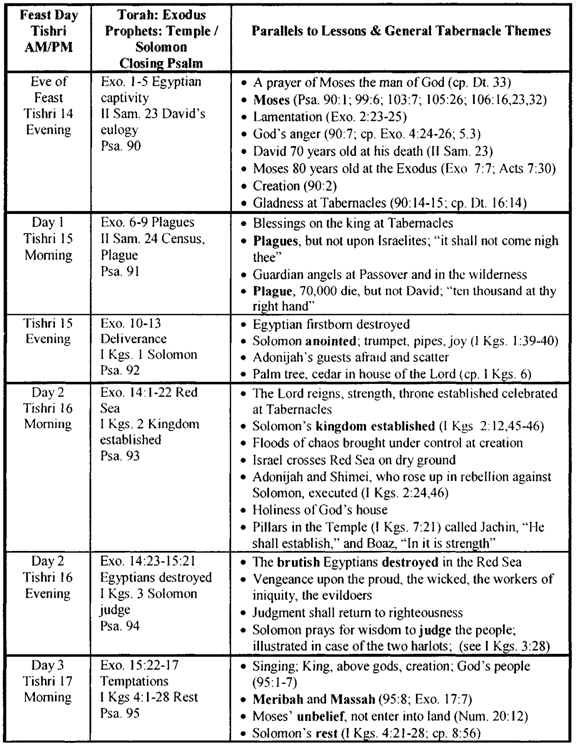
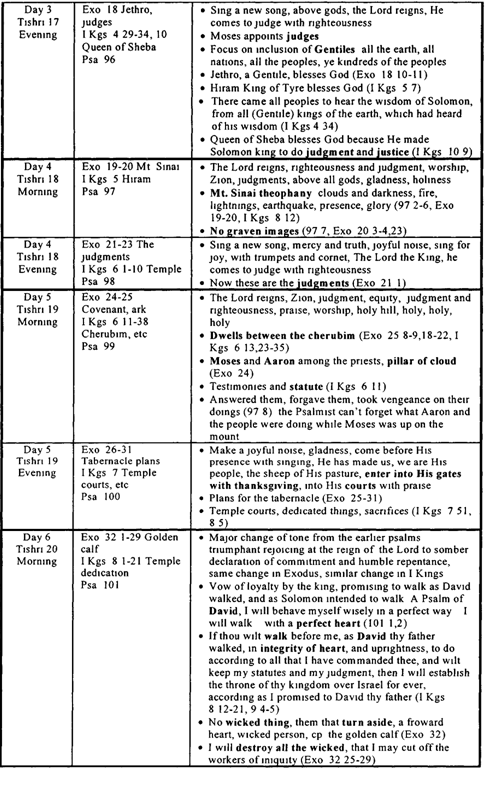
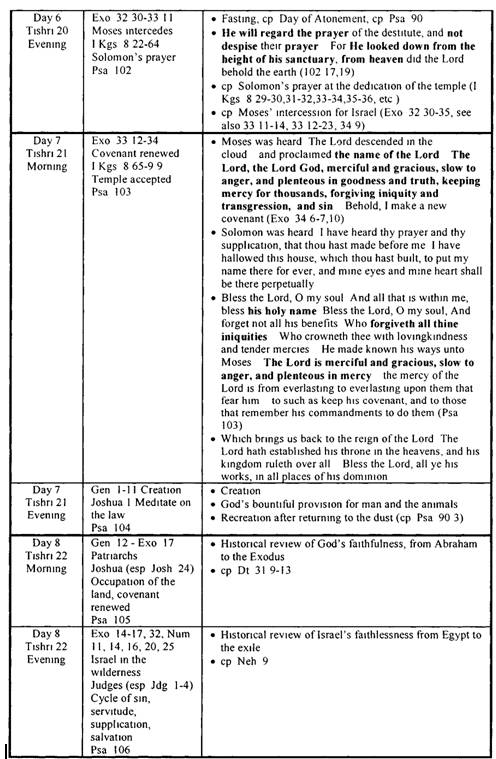
The following table summarizes the parallels we have noted between Book IV of the Psalms and the readings from the Torah and the Prophets.
Concluding Summary of Book IV, Psalms 90-106
 The Origin of the Organic World – Part One