
Most Bibles come with a set of maps, but how much do we use them? They’re tucked away enough to be forgotten, yet they are full of things waiting to be discovered. Here are a few activities to help your students discover how maps can enrich their understanding of the Bible.
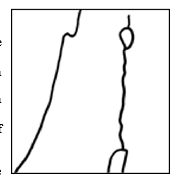
Activity 1 – Around the Sea of Galilee.
- Locate the Sea of Galilee on the map.
- What is the size of the Sea of Galilee from north to south? From west to east?
- How far is the Sea of Galilee from the Mediterranean coast?
- How far is the Sea of Galilee from the north end of the Dead Sea?
- What is the elevation of the Sea of Galilee relative to sea level?
- What is the elevation of the Dead Sea?
- What river feeds into and out of the Sea of Galilee? Label it on the map. Which way does this river flow?
- Matt 4:18. What does the Sea of Galilee have that the Dead Sea does not have? Why?
- How many different names does the Sea of Galilee have in the Bible? What is the earliest name? A Bible dictionary can help here.
- What tribes of Israel received their inheritance on the west side of the Sea of Galilee?
- How does your answer to question 10 give meaning to the prophecy in Isa 9:1-2? Cp. Matt 4:12-17.
- What are the names of the cities that were located around the Sea of Galilee during the ministry of Jesus? Place them on the map.
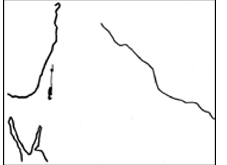
Supplemental activity. Read about the Sea of Galilee in a Bible dictionary. How does the information in the dictionary relate to the geography of the region?
Activity 2 – Israel’s enemies in the days of the Judges.
- List the nations that oppressed Israel during the time of the Judges. See Jdgs 3:8; Jdgs 3:12-13; Jdgs 3:31; Jdgs 4:2; Jdgs 6:1, 33; Jdgs 10:7, and Jdgs 13:1.
- Label Israel. Then show these nations on the map.
- Jdgs 2:14. How is the geographic location of these nations described in relation to Israel?
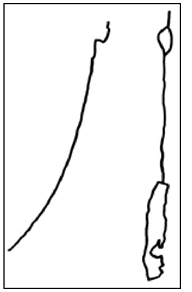
Activity 3 – Where David and his men took refuge.
- List the places that David went when he was fleeing from King Saul. See 1Sam 21:1,10; 22:1,3-4,5; 23:5,14,24,29; 25:1-2. Cp. 1Sam 26:1-3; 27:2,5-6, and 2Sam 2:1.
- Locate these on the map.
- Estimate the distance that David and his men traveled as they tried to stay a step ahead of Saul. How long would it take you to walk this distance?
- What was the terrain like in the places where David stayed? Look at a topographical map. Also look for clues in the Bible passages.
- What difficulties would you face if you had to be constantly on the move like this?
Activity 4 – Bible details come to life.
1) “A certain man went down from Jerusalem to Jericho” (Luke 10:30).
- How far is it from Jerusalem to Jericho?
- What is the elevation of Jerusalem?
- What is the elevation of Jericho?
- How much does the land drop for the traveler who goes down from Jerusalem to Jericho?
2) “The Jews’ Passover was at hand, and Jesus went up to Jerusalem” (John 2:13).
- Why does the Bible consistently speak of going up to Jerusalem? What geographical fact is reflected in this expression?
- Use a concordance or search device and find other passages that speak of going up to Jerusalem.
- What spiritual lessons can be drawn from the idea of going up to Jerusalem?
3) “But not long after there arose against it a tempestuous wind, called Euroclydon. And when the ship was caught, and could not bear up into the wind, we let her drive. And running under a certain island which is called Clauda (Cauda),
we had much work to come by the boat: Which when they had taken up, they used helps, undergirding the ship; and, fearing lest they should fall into the quicksands, strake sail, and so were driven” (Acts 27:14-17).
- Read Acts 27:14 in the RSV, NIV, or ESV. What is another name for Euroclydon? Which way does the wind blow in this kind of storm? (Hint. Winds are named for the direction they come from.)
- Find the island of Crete on a Bible map. Locate Fair Havens (Acts 27:8); Phoenix (Acts 27:12), and Cauda (Acts 27:16).
- Read Acts 27:17 in a modern version. Find Syrtis on a map. In what direction would Paul’s ship be driven if the wind drove it from Cauda to Syrtis? How is this consistent with the fact that the storm was a “northeaster”?
The Satellite Bible Atlas – Learning Bible Geography Online
Go to http://www.bibleplaces.com/satellite-bible-atlas-schlegel/. Scroll down to Teaching Videos and let the learning begin. The Satellite Bible Atlas site offers a menu of eleven teaching videos that run from five to 18 minutes in length. You can watch them online and they make valuable connections with the Bible. For example, the video called “Land of the Bible: Basic Regions and Regional Variety” introduces the major geographical regions of Israel. It takes ten minutes to watch and connects the geography of the land with Israel’s struggles to conquer it in the days of Joshua and the Judges. A short section on rainfall helps us understand passages like Deut 11:11 and Jer 5:24.
If your students read a modern version of the Bible, they will come across terms like Negeb (Negev) and Shephelah. The AV simply calls these areas “the south” and “the low country”. The same video shows where these places are and what they are like.
The videos are instructive in their own right or they can be used to enrich other Sunday school lessons. Here’s a suggestion: after doing the first two parts of Activity 4 above, watch the 11- minute video entitled “The Road from Jericho to Jerusalem.” You will travel the road with your students and Bible details will indeed come to life. The videos are young-people friendly. I think you will enjoy using them.
 The Origin of the Organic World – Part One