
The founding of the church at Corinth is briefly described in Acts. When he arrived in Corinth, Paul “reasoned in the synagogue every sabbath, and persuaded the Jews and the Greeks” (Acts 18:4).
Some converts resulted, but strong Jewish opposition discouraged Paul. In a night vision, the Lord informed Paul that he had much people there. With this incentive, Paul continued his teaching almost two years during his second missionary journey (18:11,18).
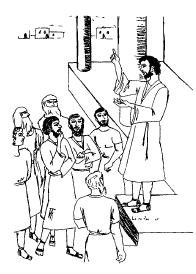
The third missionary journey was centered in Ephesus. While there, Paul received reports of major difficulties and divisions within the Corinthian Ecclesia. In response to these reports and to answer other questions that had arisen, Paul wrote his first letter to the Corinthians. After writing that epistle, Paul was concerned that it might have been too stern. He was therefore greatly relieved when Titus reported the positive response of the Corinthian believers to first Corinthians (II Cor. 7:6).
The second letter was written to explain why he had not visited them as he had planned (I Cor. 16:5). He also provides arguments designed to help them recognize and combat the false apostles that were troubling them (II Cor. 11:13).
Contents of II Corinthians
Paul begins his epistle with a salutation (1:1-11) followed by thanksgiving and praise to God. He then apologizes for his change in plans (1:12-2:4) and urges the Corinthians to forgive the repentant brother (2:5-11). He explains the importance of the gospel and the advantages of the new and glorious covenant that fades not away (2:12-3:18).
In spite of many persecutions and sufferings, he preached the gospel in the confidence that as Jesus was raised, he also would be raised to judgment (4:1-5:10). Paul explains that he had once considered Jesus to be an impostor but now he was Christ’s ambassador (5:11-21). Serving his master and speaking the Truth had produced much suffering for Paul, but he continues to serve and will do so to the end (6:1-10). He appeals to the Corinthians to watch their associations and to remain separate from pagan influences (6:11-7:1).
Paul then describes the joy that he felt at the report of Titus and encourages them to have their pledges ready for the Jerusalem poor fund (7:2-9:15).
Defending his ministry (10), Paul recalls his many persecutions and sufferings for the gospel’s sake (11:1-12:10).
When he visits again, he promises that he will not be a burden (12:11-21). The epistle ends with a final warning and warm conclusion (13).
Insight into Paul
II Corinthians provides unique insight into the apostle Paul. In a spirited and sometimes anguished dialogue, Paul grapples with problems introduced into Corinth by false apostles. As Paul corrects some wrong impressions of himself, we learn more about his personality than in any other letter.
The boasting’s and accusations of the false apostles forced Paul to defend himself as a servant of Jesus Christ. The awkwardness of this unpleasant and embarrassing task is clearly evident in the epistle. “Would to God ye could bear with me a little in my folly” is his introductory comment to the enumeration of what he has suffered for Christ’s sake (10:17).
Paul’s “foolish” comparisons include his labor and his sufferings — his stripes, imprisonments, beatings and shipwrecks. His daily care of all the churches (11:28) would be more than enough for most. In spite of all he went through, Paul can still say: “We are troubled on every side, yet not distressed; we are perplexed, but not in despair” (4:8). Our troubles pale when compared to those Paul experienced. Can we adopt his attitude to affliction? Other scriptures say we must (Mk. 13:13; II Tim. 2:3).
Wonderful tact
In I Corinthians, Paul had exhorted the brethren: “Upon the first day of the week let every one of you lay by him in store, as God hath prospered him…” (I Cor. 16:1-3). That the Corinthians had pledged to do this is evident, for Paul relates how he had boasted to other ecclesias of their willingness (II Cor. 9:2).
Now he counsels them to fulfill what they had pledged according to their own conscience, “not reluctantly or under compulsion” (9:7 NIV). Paul’s exhortation makes the donor comfortable with his gift and, if his heart is moved to consider God’s bounty, the gift will be a generous one.
If we act with generosity, our generous gift will contribute twice. It will furnish the recipient’s need, and his praise will give glory to God. A gentle note is added: if we think our own gift is too much, we need consider the sacrifice made by our Lord and savior. None of us has been as generous as Jesus. Besides, everything we have has been given to us by God.
Memorable verses
This epistle is full of well-known verses. Here are some of them:
“For the things which are seen are temporal; but the things which are not seen are eternal” (4:18).
“For we walk by faith, not by sight” (5:7).
“Bringing into captivity every thought to the obedience of Christ” (10:5).
“The simplicity that is in Christ” (11:3).
“My grace is sufficient for thee: for my strength is made perfect in weakness” (12:9).
Be sure to look for others as you read one of Paul’s most fascinating letters.
 The Origin of the Organic World – Part One